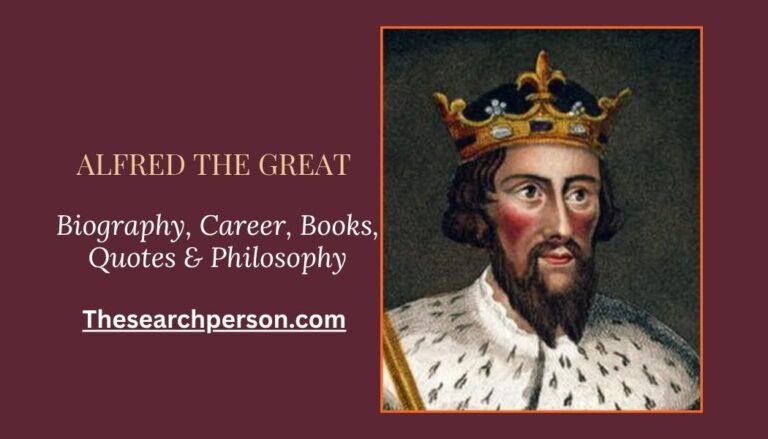
Alfred the Great remains one of the most influential and admired kings in English history. His leadership, reforms, military strategy, and vision shaped the foundation of what later became the unified Kingdom of England. Known for his wisdom, courage, and deep commitment to learning, Alfred stands apart from other medieval rulers. This biography explores his early life, achievements, books, philosophy, religion, family tree, children, and the legacy he left behind. It also explains his struggles against the Vikings, his reforms, and his impact on education and law.
Biography
Alfred the Great was born in 849 AD in Wantage, Berkshire, England. He became the King of Wessex in 871 AD at the young age of 21. During a time dominated by Viking invasions, Alfred emerged as a strong leader who defended his kingdom and laid the groundwork for a united England. His reign combined military strength, intellectual achievement, and administrative reform.
Biography Overview
| Category | Details |
|---|---|
| Full Name | Alfred of Wessex (Alfred the Great) |
| Birth | 849 AD, Wantage, England |
| Death | 26 October 899 AD |
| Title | King of Wessex |
| Reign | 871–899 AD |
| Known For | Defeating Vikings, education reforms, law code |
Table of Contents
Early Life and Education
Alfred was the youngest son of King Aethelwulf of Wessex. He did not expect to become king because several older brothers stood before him in succession. Despite political challenges, Alfred showed exceptional intelligence from a young age. His mother, Osburh, encouraged him to read, and he memorized poetry before he could even write.
He traveled to Rome as a child, where he learned about religious traditions, diplomacy, and statecraft. These early experiences shaped his vision of leadership.
Although Alfred suffered chronic health issues throughout his life, he remained mentally strong, determined, and brave. Many historians believe he may have had Crohn’s disease or a similar condition.
Physical Stats (Historical Estimates)
| Attribute | Information |
|---|---|
| Height | Estimated 5’8”–5’11” |
| Build | Slim, due to chronic illness |
| Appearance | Fair features, bearded, noble bearing |
Rise to the Throne
Alfred became king during a turbulent period. His brother, King Aethelred I, died during battles against Viking forces. Alfred took the throne in 871 AD and faced one of the worst crises in English history. Viking armies had taken over large parts of England, leaving Wessex as the last stronghold of Anglo-Saxon rule.
Despite limited resources, Alfred reorganized the army, built fortified towns, and created tactical defenses that changed the course of war.
Alfred the Great and the Vikings
The Vikings were Alfred’s greatest enemies. They attacked Wessex multiple times, and at one point Alfred was forced to flee into the marshes of Somerset. However, he refused to surrender.
From the marshes, Alfred led a small resistance force, rebuilding morale and gathering support from loyal soldiers. In 878, he won the Battle of Edington, a turning point in the Viking wars. The victory forced Viking leader Guthrum to retreat and eventually convert to Christianity.
This moment solidified Alfred’s legacy as a heroic defender of England.
Career Info
| Category | Details |
|---|---|
| Major Battles | Edington, Reading, Ashdown |
| Key Enemies | Vikings, Guthrum |
| Military Innovations | Navy, fortified towns, rotating army |
| Government Reforms | Legal code, education programs |
Major Military Achievements
Alfred’s military accomplishments included:
- Creating England’s first navy, known as “Alfred’s ships”
- Establishing fortified towns (“burhs”) at strategic locations
- Organizing the fyrd, a system where soldiers served on rotation
- Developing military strategies to counter Viking hit-and-run tactics
- Making long-term peace treaties that protected Wessex borders
His military reforms strengthened Anglo-Saxon power for centuries
Administrative and Legal Reforms
Alfred was not only a warrior but also a visionary reformer. He introduced several administrative changes:
Legal Reforms
Alfred compiled old laws and added new ones, creating the Doom Book (or “Book of Laws”). This legal code:
- Promoted fairness
- Protected the weak
- Included principles from the Bible
- Balanced justice with mercy
Town Planning
Alfred reorganized cities into fortified boroughs, which became administrative and trade centers.
Education and Literacy
He encouraged learning among nobles and commoners. Alfred believed an illiterate society could not prosper.
Alfred the Great’s Religion
Alfred was a deeply religious Christian king. His faith guided his political decisions, lawmaking, and personal morality. He promoted Christian education, brought scholars to Wessex, and supported Church reforms. His spiritual outlook shaped his philosophy of leadership, emphasizing justice, humility, and service.
Family, Relationships & Lineage
| Category | Details |
|---|---|
| Wife | Ealhswith |
| Father | King Aethelwulf |
| Children | Edward the Elder, Aethelflaed, Aethelweard, etc. |
| Dynasty | House of Wessex |
Books Written or Translated by Alfred
Alfred personally translated or oversaw translations of major works into Old English. Some important books include:
- Pastoral Care by Gregory the Great
- The Consolation of Philosophy by Boethius
- The History of the World by Orosius
- Dialogues of Gregory
- The Anglo-Saxon Chronicle (compiled during his reign)
These efforts preserved knowledge during a dark period of European history.
Quotes & Philosophy
Alfred’s philosophy centered on wisdom, justice, and leadership. Some notable ideas include:
- A king must serve God and his people.
- Education is essential for a strong kingdom.
- Justice should protect the poor and weak.
- Peace and wisdom are greater than wealth.
His quotes reveal a thoughtful ruler committed to moral governance.
Major Achievements
| Achievement | Impact |
|---|---|
| Defeated Vikings | Saved Anglo-Saxon England |
| Founded navy | Protected coastlines |
| Education reforms | Preserved knowledge |
| Legal code | Established justice |
| Town system | Enabled trade and safety |
Death and Legacy
Alfred the Great died on October 26, 899 AD. His exact burial site is uncertain, but many believe he was buried at Winchester. After his death, his son Edward the Elder continued his work and expanded his kingdom.
Alfred’s legacy includes:
- Foundation for the Kingdom of England
- Lasting educational reforms
- A strong legal and administrative system
- Historical writings that preserved Anglo-Saxon culture
His leadership shaped the identity of early England.
Alfred the Great Kingdom Overview
Alfred ruled the Kingdom of Wessex, located in southern England. Under his rule, Wessex expanded and became the most powerful Anglo-Saxon kingdom. His vision eventually led to the unification of England.
Alfred the Great Family Tree
Alfred belonged to the House of Wessex. His family tree included:
- Father: King Aethelwulf
- Mother: Osburh
- Brothers: Aethelred I, Aethelbald, Aethelberht, Aethelstan
- Wife: Ealhswith
- Children: Edward the Elder, Aethelflaed, Aethelgifu, Aelfthryth, Aethelweard
Children of Alfred the Great
Alfred had several children who shaped English history:
- Edward the Elder – succeeded Alfred as king
- Aethelflaed – ruled Mercia, known as “Lady of the Mercians”
- Aethelgifu – became a nun
- Aelfthryth – married Count Baldwin II of Flanders
- Aethelweard – historian and scholar
Net Worth Equivalent (Historical Estimate)
Although kings did not have personal bank accounts, Alfred controlled vast resources. Modern historians estimate his equivalent wealth:
| Asset Type | Estimated Value Today |
|---|---|
| Land Holdings | Millions in value |
| Royal Treasury | Several million |
| Military Assets | Equivalent of national defense budget |
10 Facts About Alfred the Great
- He is the only English king called “the Great.”
- He created England’s first navy.
- He promoted education and literacy.
- He defeated Vikings at the Battle of Edington.
- He wrote and translated important books.
- He struggled with lifelong illness.
- He developed a network of fortified towns.
- He created a legal justice system based on fairness.
- He encouraged scholars from Europe to visit Wessex.
- His daughter Aethelflaed became a powerful ruler.
More Info About TheSearchPerson